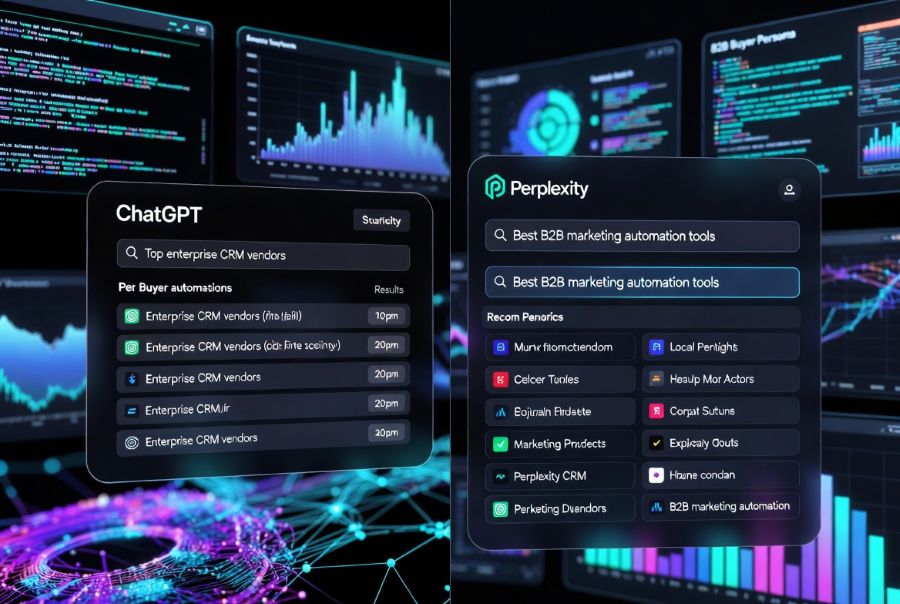
ChatGPT vs Perplexity B2B search highlights a fundamental shift in how enterprise buyers research solutions. ChatGPT excels at conversational synthesis and broad recommendations, while Perplexity focuses on citation-first, source-transparent answers. Understanding these differences allows B2B brands to create content strategies that improve visibility in both platforms. The goal is not to chase every answer, but to become a clearer, more trustworthy source that AI tools are more likely to reference.
In 2026, many B2B buying journeys begin with AI tools. Companies that adapt win earlier mindshare and stronger consideration.
What ChatGPT vs Perplexity B2B Search Means in the AI-Search Era
ChatGPT and Perplexity represent two distinct approaches to generative search:
- ChatGPT (and similar models) prioritizes fluent, conversational responses. It synthesizes information into coherent narratives and often makes direct recommendations based on patterns in its training data and retrieved sources.
- Perplexity emphasizes transparency and citations. It functions more like a research assistant, showing sources inline and favoring verifiable, well-documented information.
For B2B buyers, this means different discovery behaviors. ChatGPT may introduce brands conversationally (“One strong option is…”), while Perplexity tends to list and cite multiple sources with clear attribution. Both influence shortlist formation, but in different ways.
Further reading: ChatGPT vs. Perplexity for B2B buyers
Why This Matters for Rankings, Recommendations, and Revenue
B2B decision-makers increasingly use AI tools in the early research phase. When a procurement lead asks “best account-based marketing platforms for enterprise,” the AI’s response shapes the shortlist before your website is even visited.
This creates real business impact:
- Brands that appear confidently in ChatGPT gain early consideration.
- Brands cited with sources in Perplexity build credibility through transparency.
- Missed AI visibility leads to lost opportunities in the invisible funnel.
- Strong performance in both tools correlates with higher traditional rankings through improved E-E-A-T signals.
Leadership teams that understand these platform differences can make smarter content and visibility investments.
Further reading: ChatGPT vs. Perplexity magyar változat
The Practical Framework: Audit, Structure, Prove, Measure
A strategic approach to ChatGPT vs Perplexity visibility follows four pillars:
1. Audit Test key buying-stage prompts in both tools. Document brand mentions, sentiment, citation quality, and competitor positioning. Identify patterns and gaps.
2. Structure Create content optimized for each platform’s strengths:
- Conversational, narrative-friendly pages for ChatGPT.
- Citation-rich, well-sourced content for Perplexity.
- Clear comparison tables and transparent data for both.
3. Prove Demonstrate real expertise with original research, detailed case studies, measurable results, and transparent methodology. AI tools increasingly favor verifiable authority.
4. Measure Track:
- Mention frequency and quality in both platforms.
- Traditional search performance as a supporting signal.
- Pipeline influence and self-reported attribution.
- Sentiment trends over time.
Related reading: Decoding the AI Visibility Index for SaaS Brands
Technical and Content Requirements for AI Visibility
AI platforms need content that is:
- Technically accessible — Server-rendered HTML, fast loading, mobile-friendly.
- Semantically clear — Logical structure, consistent terminology, descriptive headings.
- Trustworthy — Strong E-E-A-T through authorship, sourcing, and transparency.
- Helpful — Direct answers to buyer questions with practical details.
For B2B brands, this means investing in detailed solution pages, comparison content, case studies with real metrics, and clear service descriptions.
Related reading: Gyors SEO audit AI-val
Common Mistakes to Avoid
- Creating generic content that lacks specific examples or data.
- Hiding key information behind forms or paywalls.
- Inconsistent brand messaging across pages.
- Focusing only on ChatGPT while ignoring Perplexity’s citation preference.
- Neglecting technical accessibility and structured data.
These mistakes reduce AI confidence and recommendation likelihood.
Implementation Checklist
- Map key buyer questions and create dedicated answer pages.
- Build transparent comparison content with clear tables.
- Add proper schema markup and authorship signals.
- Strengthen internal linking between related topics.
- Include real metrics and case studies with verifiable results.
- Ensure core content loads in raw HTML.
- Test regularly with platform-specific prompts.
- Review performance quarterly and adjust strategy.
Related reading: Keresőoptimalizálás szolgáltatás
Summary
ChatGPT and Perplexity represent different but equally important discovery paths for B2B buyers. By understanding their strengths and optimizing content for conversational fluency and citation transparency, brands can improve their chances of being seen as credible solutions. While no strategy guarantees specific recommendations, consistent focus on clarity, trust, and usefulness significantly strengthens AI visibility and overall digital authority.
Businesses that treat this as a strategic priority will maintain stronger influence as AI continues to shape B2B buying behavior.
Ready to improve your brand’s position in AI search? Request a professional AI Visibility Audit, AI SEO consultation, or full strategy session from Roth Creative. We help leadership teams improve source inclusion, strengthen entity clarity, enhance technical accessibility, build better internal linking, and drive measurable revenue attribution from both traditional and generative search.
FAQ
Do B2B buyers use ChatGPT or Perplexity more? Usage varies by stage. ChatGPT is popular for broad exploration, while Perplexity is favored for research that requires source verification.
Which platform sends more useful traffic? Perplexity often drives more intentional traffic due to its citation-focused nature, but both contribute to the invisible funnel.
How do citations affect trust? Citations increase perceived trustworthiness. Perplexity’s model especially rewards well-sourced, transparent content.
What content wins in Perplexity? Detailed, well-structured content with clear data, comparisons, case studies, and transparent sourcing performs strongly.
What should SaaS brands test? Regularly test category-level questions, comparison prompts, feature-specific queries, and use-case scenarios relevant to their buyers.
Miért választotak Ők minket?
- Google keresőoptimalizálás
- Weboldal keresőoptimalizálás (SEO)
- előtetők
- warhammer
- Boxkesztyű
- Seo ügynökség
- keresőmarketing ügynökség
- SEO vagy Google Ads
- bor
- Mellplasztika
- lumineers
- bútorok
- linképítés
- előtetők
- python programozás
- Budapesti kárpittisztítás
A Roth Creative-nál hiszünk abban, hogy minden vállalkozás megérdemli, hogy felfigyeljenek rá az online térben! Marketing csapatunk minden részletre odafigyelve dolgozik azon, hogy igazán ütős stratégiát alkossunk, amely nemcsak láthatóságot, de valódi eredményeket is hoz. Akár SEO-ról, fizetett hirdetésekről vagy márkaépítésről van szó, nálunk mindig számíthatsz kreativitásra és egyedi megoldásokra.
Comments are closed